|
|
|
|
|
|
|
|
|
|
No.87 Sqn RAF Founded : 1st September 1917
United Provinces Maximus me metuit - The most powerful fear me
No. 87 Squadron was formed from a major part of D Squadron of the Central Flying School at Upavon on 1st September 1917. In April 1918, 87 Squadron was equipped with Dolphins when it was sent to France to fly in fighter and ground attack operations. This the squadron did to the end of the Great War, returning back to the UK in February 1919, and was disbanding on 24th June 1919. |
No.87 Sqn RAF
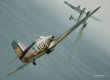  Tribute to Flt Lt Ian R Gleed by Ivan Berryman. (PC) | 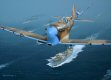  Guardian Angels by Ivan Berryman. (PC) | 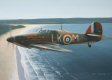  A Welcome Shore by Ivan Berryman. (PC) |   Winter Combat by Richard Taylor. |
No.87 Sqn RAF Artwork Collection |
  A Welcome Shore by Ivan Berryman. |   Down and Out by Ivan Berryman. |   Tribute to Flt Lt Ian R Gleed by Ivan Berryman. |
  Clipped Signature - Dennis David. |   Guardian Angels by Ivan Berryman. |   An Early Bath by Ivan Berryman. |
  Late Arrival by Robert Taylor. |   Front Line Hurricanes by Robert Taylor. |   Hurricane Heroes by Nicolas Trudgian. |
  Vital Force by Richard Taylor. | Winter Combat by Richard Taylor. |   Operation Jubilee by David Pentland. (P) |
  Taxi Service by David Pentland. |   Strafing Run by David Pentland. |   Danger Over Dieppe by David Pentland. |
| Aces for : No.87 Sqn RAF | ||
| A list of all Aces from our database who are known to have flown with this squadron. A profile page is available by clicking the pilots name. | ||
| Name | Victories | Info |
| Geoffrey Allard | 23.80 | |
| William Dennis David | 20.00 | The signature of William Dennis David features on some of our artwork - click here to see what is available. |
| Aircraft for : No.87 Sqn RAF | |||
| A list of all aircraft known to have been flown by No.87 Sqn RAF. A profile page including a list of all art prints for the aircraft is available by clicking the aircraft name. | |||
| Squadron | Info | ||
Manufacturer : Sopwith | Dolphin Full profile not yet available. | ||

Manufacturer : Hawker | Fury Full profile not yet available. | ||

Manufacturer : Gloster Production Began : 1935 Retired : 1945 Number Built : 746 | Gladiator GLOSTER GLADIATOR: A continuation form the Gloster Gauntlet aircraft the Gloster Gladiator (SS37) becoming designated the F.7/30 was named Gladiator on the 1st July 1935. The first 70 Gladiators had Under wing machine guns (Vickers or Lewis) before the browning became standard The first aircraft arrived at Tangmere airfield on in February 1937 to no. 72 squadron. at the outbreak of world war two a total of 218 Gladiators had been received by the Royal air force with a total of 76 on active service. They served also in the Middle eats and in 1940 when Italy joined the war was nearly the only front line fighter in the middle east. Between 1939 and 1941. the Gloster Gladiator flew in many war zones. flying in France, Greece, Norway, Crete Egypt Malta and Aden. The Aircraft claimed nearly 250 air victories. It stayed in front line duties until 1942, then becoming fighter trainer, and other sundry roles. It continued in these roles until the end of world war two. The Naval equivalent the Sea Gladiator a short service in the Middle east and European waters. A Total of 746 aircraft were built of these 98 were Sea Gladiators.. Performance. speed: 250mph at 17,500 feet, 257 mph at 14,600 Range 430 miles. Armament: Two fixed .3-03 browning machine guns | ||

Manufacturer : Hawker Production Began : 1936 Number Built : 14533 | Hurricane Royal Air Force Fighter, the Hawker Hurricane had a top speed of 320mph, at 18,200 feet and 340mph at 17,500, ceiling of 34,200 and a range of 935 miles. The Hurricane was armed with eight fixed wing mounted .303 browning machine guns in the Mark I and twelve .303 browning's in the MKIIB in the Hurricane MKIIC it had four 20mm cannon. All time classic fighter the Hurricane was designed in 1933-1934, the first prototype flew in June 1936 and a contract for 600 for the Royal Air Force was placed. The first production model flew ion the 12th October 1937 and 111 squadron of the Royal Air Force received the first Hurricanes in January 1938. By the outbreak of World war two the Royal Air Force had 18 operational squadrons of Hurricanes. During the Battle of Britain a total of 1715 Hurricanes took part, (which was more than the rest of the aircraft of the Royal air force put together) and almost 75% of the Victories during the Battle of Britain went to hurricane pilots. The Hawker Hurricane was used in all theatres during World war two, and in many roles. in total 14,533 Hurricanes were built. | ||
| Javelin Full profile not yet available. | ||
Manufacturer : Gloster Production Began : 1944 Number Built : 3947 | Meteor The Gloster Meteor was the first British jet fighter and the Allies' first operational jet. Designed by George Carter, and built by the Gloster Aircraft Company, Armstrong-Whitworth, the Meteor first flew in 1943 and commenced operations on 27 July 1944 with 616 Squadron of the Royal Air Force (RAF). The Gloster Meteor was not an aerodynamically advanced aircraft but the Gloster design team succeeded in producing an effective jet fighter that served the RAF and other air forces for decades. Meteors saw action with the Royal Australian Air Force (RAAF) in the Korean War and other air forces used the Meteor. The Royal Danish Air Force, The Belgian Air Force and Isreali Air Force kept the Meteor in service until the early 1970's. A Total of 3947 meteors were built and two Meteors, WL419 and WA638, remain in service with the Martin-Baker company as ejection seat testbeds. | ||
| Signatures for : No.87 Sqn RAF | |||||
| A list of all signatures from our database who are associated with this squadron. A profile page is available by clicking their name. | |||||
| Name | Info | ||||
  Wing Commander Roland Bee Beamont CBE DSO DFC DL Click the name or photo above to see prints signed by or with the mounted signature of Wing Commander Roland Bee Beamont CBE DSO DFC DL
| Wing Commander Roland Bee Beamont CBE DSO DFC DL One of World War IIs great characters, Bee flew Hurricanes with 87 Squadron, later leading a Tempest Wing. He had 8 victories plus a further 32 VIs destroyed. After the war he became a highly respected Chief Test Pilot.Wing Commander Roland Beamont, one of the RAFs top buzz bomb interceptors, was born in Enfield England on August 10, 1920. Educated at Eastborne College, Beamont accepted a short service commission with the Royal Air Force in 1938. He commenced flying in 1939 at the the No. 13 Reserve Flying School at White Waltham. His initial duty was with the Group Fighter Pool at St. Athan where he learned to fly the Hurricane. Beamont was soon posted with the No. 87 Squadron which was part of the Advanced Air Striking Force in France. Seeing action in both France and Belgium prior to the Allied withdrawl, Beamont rejoined 87 Squadron in England during the Battle of Britain. In the spring of 1941 Beamont was awarded the Distinguished Flying Cross after destroying five enemy aircraft. As Commanding Officer of 609 Squadron, Beamont pioneered both day and night ground attack missions utilizing the Typhoon. Beamont was credited with destroying 25 trains in a three month period. He was then made responsible for organizing and commanding the first Tempest Wing at Newchurch. Three days after D-Day Bearnont shot down an Me-109, marking the first aerial combat victory for the Hawker Tempest. In the summer of 1944 Beamont destroyed 32 buzz bombs prior to leading his wing to a Dutch Airfield at Volkel on the Continent. In October of 1944 Beamont was shot down during a ground attack mission over Germany, and he remained a prisoner of war until wars end. Following repatriation Beamont became an experimental test pilot with the Gloster Aircraft Company, which had developed the RAFs first jet aircraft. Turning down a permanent commission with the RAF, Beamont then joined English Electric Company in Wharton as the Chief Test Pilot for the B3/45 (Canberra) jet bomber program. He managed all prototype testing on the Canberra, and in the process set two Atlantic speed records. Later Beamont was involved with the supersonic P1/Lightning program, and became the first British pilot to fly at twice the speed of sound. From 1965 until 1970 he was a founding member of Britains highly succesful Saudi Arabian export program. For several years prior to his retirement in 1979, Beamont was Director of Operations for British Aerospace and Panavia where he was in charge of flight testing for the Tornado. Since his retirement Beamont has authored nine books, and published numerous magazine articles. He is a Fellow of the Royal Aeronautical Scociety and an Honorary Fellow of the Society of Experimental Test Pilots in America. He died 19th November 2001.
| ||||
  Group Captain Dennis David CBE DFC AFC Click the name or photo above to see prints signed by or with the mounted signature of Group Captain Dennis David CBE DFC AFC
| Group Captain Dennis David CBE DFC AFC Dennis David served with distinction in both the Battle of France and Battle of Britain. He regards the RAFs success in the former - during which he was credited with 11.5 victories - as crucial to victory in the Battle of Britain. He was a member of 87 Squadron at the outbreak of war and was posted to France in 1939 as part of the Air Component. When the Blitzkrieg began on 10th May 1940, he was a Flying Officer. He destroyed a Do17 and shared a He111 on the first day, and by the time the squadron withdrew to the United Kingdom late in the month he had brought his score to 11.5 and been awarded the DFC and Bar. He continued to fly during the Battle of Britain, destroying a Ju88 and a Bf109 on the 11th August, a Ju87, a Bf110 and another shared on the 15th and a Ju88 and Bf109 on the 25th. He shot down a He111 on 15th September and the following month was posted as a Flight Commander to 213 Squadron. On 19th October he destroyed a Ju88 to bring his score to 20 and in November was posted to 152 Squadron. In 1943, with the rank of Wing Commander, he was posted to the Middle East to command 89 Squadron on Beaufighters. In November he led the Squadron to Ceylon and early the following year was promoted again to Group Captai. He served in Burma until the end of the war, after which he remained in the RAF with the Rank of Wing Commander. He died 25th August 2000. | ||||
Squadron Leader Frank Joyce MBE Click the name above to see prints signed by Squadron Leader Frank Joyce MBE | Squadron Leader Frank Joyce MBE Originally flying Hurricanes with 87 Squadron, he was shot down in May 1940 during the Battle of France, was badly injured bailing out and lost his leg. After having a false leg fitted, he returned to active service duties with 286 Squadron, flying Defiants on coastal patrols. | ||||
  Flight Lieutenant Alex Thom DFC Click the name or photo above to see prints signed by or with the mounted signature of Flight Lieutenant Alex Thom DFC | Flight Lieutenant Alex Thom DFC Born in Perth, Scotland, Alex Thom joined the RAFVR on June 24th 1939 and flew at the weekends at 11 EARFTS Perth. At the outbreak of World War Two, Thom was called up for full time service with the Royal Air Force and was posted to 3 ITW at Hastings on October 2nd 1939, moving to 15 EFTS at Redhill on April 29th 1940 and on June 15th moved again to 15 FTS, initially at Brize Norton and later to Chipping Norton. Alex Thom went to 6 OTU on September 29th at Sutton Bridge where he converted to Hawker Hurricanes and joined 79 squadron stationed at Pembury only for a short period when he was transferred to 87 Squadron on October 6th 1940, moving with the squadron on the 31st of October to their new base at Exeter. He achieved the rank of Pilot Officer on the 3rd of December 1941. During his time at Exeter he was also based on the Scilly Isles and on one occasion after shooting down an enemy bomber the crew bailed out over the sea. Alex Thom circled the downed German crew who were in a life raft until a motor launch came and picked them up. Thom would later meet the crew and was given a flying helmet by the German pilot, an item he still has today. Alex Thom was appointed B Flight commander on 10th July 1942 and was awarded the DFC on the 14th August 1942. At this time he was credited with two enemy aircraft destroyed and a probable He111. On the 19th of August 1942 while supporting the ground forces at Dieppe, his Hurricane (LK - M) was hit by ground fire and lost oil pressure. He managed to limp back to England where he made a forced landing at East Den. Thom managed to get back to his airfield as a passenger in a Master flown by Flt Sgt Lowe and immediately took off again in Hurricane (LK - A) back to Dieppe where he proceeded to strafe enemy positions. On the 1st of October 1942 he became F/O. In November 1942, 87 Squadron was transferred to North Africa. They were transported by ship to Gibraltar where the squadron flew sorties, and then onto North Africa. Thom was posted away from the squadron to be a flying control officer at Bone. He returned to 87 Squadron which was then based at Tongley and took command on June 27th 1943. He was again posted away from the squadron on September 27th returning to the UK with the Rank of Flight Lt. Thom became an instructor with 55 OTU at Annan on November 17th moving to Kirton in Linsay on March 12th 1944 to join 53 OTU. He was appointed Flight Commander Fighter Affiliation Flight at 84 (Bomber) OTU at Husbands Bosworth on May 19th 1944 and remained there until October 10th when he went to RAF Peterhead as Adjutant. His final posting was to HQ13 Group, Inverness on May 8th 1945 as a Staff Officer and retired from the RAF on December 4th 1945 as a Flight Lt.  Alexander Thom DFC signing some of our art prints in 2010. Cranston Fine Arts offer our warmest thanks to Alexander Thom for taking the time to meet with us and add his signature to some of our artwork. Citation for the Distinguished Flying Cross : This officer has been engaged on operational flying for a long period, both by day and by night. Throughout he has displayed great keenness and devotion to duty. He has destroyed two enemy aircraft both of which he shot down after pursuing them out to sea for more than 50 miles. On one occasion, he engaged a Heinkel 111 in extremely hazardous flying weather and probably destroyed it. Recently, Pilot Officer Thom has completed several successful intruder operations. He has invariably displayed initiative and courage. | ||||
  Squadron Leader Laurence Thorogood DFC AE Click the name or photo above to see prints signed by or with the mounted signature of Squadron Leader Laurence Thorogood DFC AE
| Squadron Leader Laurence Thorogood DFC AE Joining 87 Squadron on June 14th 1940, Laurence Thorogood was thrown straight into the Battle of Britain, destroying a Ju88 on 25th August. Commissioned in 1941 he then was posted to India and remained in the Far East until the end of the war. He served with No 9 Sqn Indian Air Force (Hurricane IIc) and 67 Sqn RAF (Spitfire VIII) in the campaign down the Arakan Coast. Staying in the RAF after the war, he served in Singapore and Sumatra with 155 Sqn before converting to Vampires on 130 Sqn, after two years instructing on Oxfords at Middle Wallop, we was Adjutant with 615 Sqn, Biggin Hill before moving to Germany in 1951 to fly Vampires with 118 and 94 Sqns. He served on the Thor missile system before finishing his career as a civilian in Whitehall. Sadly Laurence Thorogood passed away in December 2005. We would like to thank Dr John Thorogood for supplying the photo of his father. | ||||
|
Contact Details |
Sign Up To Our Newsletter!
This website is owned by Cranston Fine Arts. Torwood House, Torwoodhill Road, Rhu, Helensburgh, Scotland, G848LE Contact: Tel: (+44) (0) 1436 820269. Email: cranstonorders -at- outlook.com
|
|


