|
|
|
|
|
|
|
|
|
|
No.357 Sqn RAF Founded : 1st February 1944
(Special Duties) Mortem hostibus - We bring death to the enemy
|
No.357 Sqn RAF
No.357 Sqn RAF Artwork Collection |
  Larry Lewis DFC by Graeme Lothian. |
| Aircraft for : No.357 Sqn RAF | |||
| A list of all aircraft known to have been flown by No.357 Sqn RAF. A profile page including a list of all art prints for the aircraft is available by clicking the aircraft name. | |||
| Squadron | Info | ||

Manufacturer : Douglas Production Began : 1941 Retired : 1970 | Dakota DOUGLAS DAKOTA, Transport aircraft with three crew and can carry 28 passengers. speed 230-mph, and a altitude of 23,200 feet. maximum range 2,100 miles. The Douglas Dakota served in all theatres of world war two, The Royal Air Force received its first Douglas Dakota's in April 1941, to 31 squadron which was serving in India. These were DC2, later DC3 and eventually C-47 Dakotas were supplied. The Douglas Dakota was developed from the civil airliner of the 1930's. The Royal Air Force received nearly 2,000 Dakotas, But many more than this served in the US Air Force and other allied countries. The last flight of a Douglas Dakota of the Royal Air Force was in 1970. You can still see Douglas Dakota's in operational and transport use across the world. | ||
Manufacturer : Lockheed Production Began : 1939 Number Built : 2584 | Hudson In 1938, the British Purchasing Commission sought an American maritime patrol aircraft and light bomber for the United Kingdom to support the Royal Air Force's Avro Anson. On 10th December 1938, Lockheed produced a modified version of the Lockheed Model 14 Super Electra which was a commercial airliner and the Hudson Mk I went into production. The Hudson was the first significant aircraft construction contract for the Lockhead Aircraft Corporation with the initial RAF order for 200 Hudsons far surpassed any previous order the company had received. By February 1939, Hudsons began to be delivered. A total of 350 Mk I and 20 Mk II Hudsons were supplied in total. These had two fixed Browning machine guns in the nose and two more in a Boulton Paul dorsal turret. Initially the first batch of Hudsons were supplied to No.224 Squadron RAF based at RAF Leuchers in May 1939. By the start of the war in September 78 Hudsons were in service. Not only did the RAF use the Hudson but the Hudson also served throughout the war with Coastal Command and was also used in transport and training roles as well as delivering agents into occupied France. They were also used extensively with the Royal Canadian Air Force wiht their anti-submarine squadrons. They were operated by RAF Special Duties squadrons for clandestine operations, with No.161 Squadron in Europe and No.357 Squadron operating in Burma. During the war, they were used as maritime patrol aircraft in the Pacific by the US Navy, the RAAF and the Royal New Zealand Air Force. A total of 2,584 Hudsons were built. They began to be withdrawn from front line service in 1944. The Hudson provided the basis for the development of the Lockhead Ventura. | ||
| Signatures for : No.357 Sqn RAF | |||||||
| A list of all signatures from our database who are associated with this squadron. A profile page is available by clicking their name. | |||||||
| Name | Info | ||||||
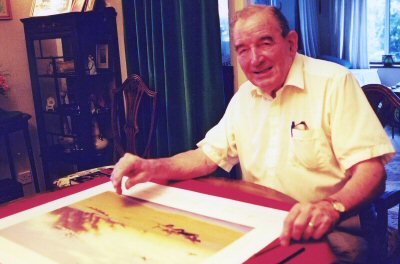
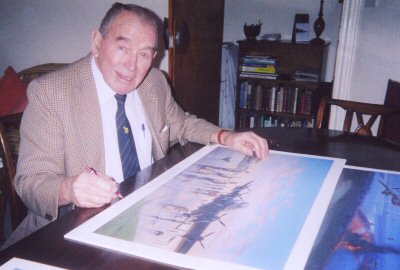
 Sqd Ldr Larry Lewis DFC DFM Click the name above to see prints signed by Sqd Ldr Larry Lewis DFC DFM
| Sqd Ldr Larry Lewis DFC DFM Larry Lewis started the war on Wellingtons, moving to Dakotas on Special Operations in Burma where he won an immediate DFC for a mission to pick up crew and special forces from the jungle, where two other Dakotas had failed.
| ||||||
|
Contact Details |
Sign Up To Our Newsletter!
This website is owned by Cranston Fine Arts. Torwood House, Torwoodhill Road, Rhu, Helensburgh, Scotland, G848LE Contact: Tel: (+44) (0) 1436 820269. Email: cranstonorders -at- outlook.com
|
|