|
|
|
|
|
|
|
|
|
| THIS ITEM IS INCLUDED IN OUR BUY ONE GET ONE HALF PRICE OFFER ! Choose any two prints in this special offer and the lower priced item is half price. (Any free bonus prints already supplied with an item are separate and will also be included !) Hundreds of items across our websites are included in this offer! |
| |||||||||||||||||||||||||||||||
| Extra Details : Pre Season Practice by Trevor Lay. | ||
|
| Signatures on this item | |
| *The value given for each signature has been calculated by us based on the historical significance and rarity of the signature. Values of many pilot signatures have risen in recent years and will likely continue to rise as they become more and more rare. | |
| Name | Info |
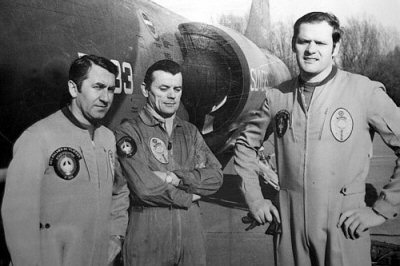
 Adjutant Chef Palmer De Vlieger *Signature Value : £25 | Adjudant Chef Palmer De Vlieger was one of the two display pilots for The Belgium Air Force F -104 display team. The Slivers. The Display team gave their first public demonstration on May 14, 1969 during the international meeting at Brustem. Their show was based on synchronised high speed crossings with the runway axis as a reference point. The aircraft were painted in the traditonal 'vietnam' camouflage - 2 tones of green, tan and grey on the underside. In these first years the planes wore an insigna on the air intakes depicting 2 silhouettes of a F-104 crossing on a red disc. This insigna disappeared to be replaced by the teams name from the 1972 season on. The Slivers disbanded in July 1975 as Major Steve Nuyts was called upon other duties and there were no candidates to replace him. This during the seven years the team made 68 official presentations, and displayed in 5 European countries - Belgium, United Kingdom, Germany, France and Italy. |
 Major Steve Nuyts *Signature Value : £30 | Major Steve Nuyts was one of the two display pilots for The Belgium Air Force F -104 display team. The Slivers. The Display team gave their first public demonstration on May 14, 1969 during the international meeting at Brustem. Their show was based on synchronised high speed crossings with the runway axis as a reference point. The aircraft were painted in the traditonal 'vietnam' camouflage - 2 tones of green, tan and grey on the underside. In these first years the planes wore an insigna on the air intakes depicting 2 silhouettes of a F-104 crossing on a red disc. This insigna disappeared to be replaced by the teams name from the 1972 season on. The Slivers disbanded in July 1975 as Major Steve Nuyts was called upon other duties and there were no candidates to replace him. This during the seven years the team made 68 official presentations, and displayed in 5 European countries - Belgium, United Kingdom, Germany, France and Italy. |
| The Aircraft : | |
| Name | Info |
| Starfighter | The introduction of the Mig-15 by Communist forces during the Korean War, came as a shock to military planners in the United States. The Mig-15 showed some superior attributes even when compared to the F-86. This rude awakening increased the Air Forces interest in a new generation of fighters which would be faster and more maneuverable than any enemy aircraft which would be encountered; a true air superiority machine. Clarence Kelly Johnson, Lockheeds innovative designer who would be involved in many of the most innovative aircraft designs of the century, had been thinking along these same lines, and in late 1952 the company submitted an unsolicited proposal for a new fighter, the XF-104. An initial contract was placed for prototypes, and the first flight took place in 1954. The F-104 was unlike anything the Air Force had previously flown. A long thin needle nose, a bullet-like fuselage, a small, thin mid-fuselage mounted wing, and an unusual high mounted horizontal stabilizer characterized this revolutionary design. The XF-104 attained a speed of Mach 1.7 during its flight tests, and the Air Force gave a go-ahead for production once meaningful quantities of the J-79 engines became available. The first production Starfighters reached the Air Force in February of 1956. The fuselage was lengthened by nearly six feet to accommodate the J-79. The first large production order was for 146 F-104As. These aircraft could carry wing mounted missiles, and had provision for an internal cannon. Troubles with the gun system were never really solved and most of these first F-104s were never equipped with the cannons. The simplicity of operation of this aircraft and its phenomenal speed made it an ideal interceptor, and this capability was appreciated during the Cuban Missile Crisis in 1962. Lockheed had meaningful success marketing export versions of the Starfighter shipping significant quantities to Pakistan, Italy, Germany, Greece, Japan, Taiwan, and Jordan. American military planners were disappointed with the range of the F-104. Recognizing this, Lockheed continued to refine and improve the aircraft. The F-104C was the second major variant and first flew in 1958. The C was capable of 1,450-MPH, and had an improved range of nearly 1,400 miles with drop tanks. The C was primarily used by the 479th Tactical Fighter Wing. The 479th deployed a squadron of F-104Cs to Vietnam in 1965, where the aircraft flew more than 2,000 combat sorties before being withdrawn. The F-104s were phased out of active Air Force service beginning in the mid-60s, but many aircraft remained with Air National Guard units. The last American unit to be equipped with the F-104 was the 198th Tactical Fighter Squadron of the Puerto Rico Air National Guard. The Royal Canadian Air Force also flew the 104. Its variant lacked the cannon, which was replaced by an additional fuel tank. The RCAF flew 104s until 1986. |
|
Contact Details |
Sign Up To Our Newsletter!
This website is owned by Cranston Fine Arts. Torwood House, Torwoodhill Road, Rhu, Helensburgh, Scotland, G848LE Contact: Tel: (+44) (0) 1436 820269. Email: cranstonorders -at- outlook.com
|
|


 Buy 1 Get 1 Half Price!