|
|
|
|
|
|
|
|
|
| THIS ITEM IS INCLUDED IN OUR BUY ONE GET ONE HALF PRICE OFFER ! Choose any two prints in this special offer and the lower priced item is half price. (Any free bonus prints already supplied with an item are separate and will also be included !) Hundreds of items across our websites are included in this offer! |
| |||||||||||||||||||||||||||||
| ||||||||||||||||||||||||||||||||||||||||||||||||||||||||||||||
| Signatures on this item | |
| *The value given for each signature has been calculated by us based on the historical significance and rarity of the signature. Values of many pilot signatures have risen in recent years and will likely continue to rise as they become more and more rare. | |
| Name | Info |
 Bobby Pearce *Signature Value : £40 | Bobby joined the RAF in the late 1930s training as a Wop/AG. Posted to 142 Squadron Bobby would see action during the ill fated Battle of France in the antiquated Fairey Battle as part of the Advanced Striking Force. Having suffered grievous losses Bobby would serve as an instructor on his return to England following the fall of France. He would return to 142 Squadron now flying Wellingtons during 1941. |
 Flight Lieutenant Freddie Johnson DFC (deceased) *Signature Value : £40 | Five years service on Wellington and Halifax Bombers, shot down twice, once behind enemy lines. He passed away in April 2013. |
 Flight Lieutenant Rupert Cooling (deceased) *Signature Value : £40 | Rupert joined the RAF in 1938 training at FTS Brough as pilot. Posted to IX Squadron in early 1940 flying Wellingtons he served with them through the Battle of Britain period. His second tour would take him to North Africa and the Mediterranean with 132 Squadron. Upon returning to the UK Rupert would be commissioned and see action in the run up to D-Day. He passed away in 2010. |
 Flying Officer Harry Kartz (deceased) *Signature Value : £40 | Harry joined the RAF in1940 having previously learned to fly in the Civil Air Guard during the pre war years. Upon joining the RAF he hoped to continue pilot training. However, much to his disappointment he was remustered as an airgunner passing out at Yatesbury. Posted to IX Squadron in May 1941 he immediately started operations as a front gunner in Flight Lieutenant Edwards crew on aircraft WS-N. The raid depicted in Wellington Attack would in fact be Harry's last operation with the Squadron. Having once more applied for pilot training he would be knocked back again. The RAF having decided Harry should be commissioned and re trained to run the filter room at RAF Bawdsey. After the war Harry an avid fan of horse racing won a bet that would allow him to purchase a small engineering business and following a successful career in that he would become chairmen of Aston Villa FC at the time of their League and European Cup success in the early 80s. He would die on the 12th of March, 2016. |
 Group Captain Bill Randle MBE OBE CBE DFM AFC (deceased) *Signature Value : £45 | William Samuel Oliver Randle was born in Devon on May 17 1921 and attended Exmouth Grammar School before joining Lloyds Bank. His first flight was in an Avro 504K of Alan Cobhams Flying Circus and from that moment he was obsessed with flying. After serving in the Home Guard during the London Blitz he enlisted in the RAF in February 1941, training as a pilot in the United States and in Britain. In July 1942 he joined No 150 Squadron, based in Yorkshire, as a sergeant pilot to fly the Wellington. He attacked targets in the Ruhr and deeper into Germany. Soon after returning from Gibraltar Randle was awarded an immediate DFM, the citation stating that he had ‘carried out all his attacks with persistent skill and courage and shown superb captaincy and airmanship’. It was, however, Air Ministry policy that successful evaders would not return to operational flying over north-west Europe. Randle was commissioned and became an instructor at a bomber training unit, a role he filled at various locations for the rest of the war. For his exceptional service he was mentioned in despatches and awarded an AFC. For five years after the war Randle worked in the Air Intelligence Branch, specialising in combat survival and rescue. He was attached to the USAF, and in December 1952 left for Korea to serve in the 3rd Air Rescue Group. Flying the SA 16 amphibious aircraft, he made a number of long range rescue sorties behind enemy lines on search missions and to provide cover for pickup operations of shot-down aircrew. The Americans awarded him their ‘Air Medal’. While commanding the Flying Wing at RAF Thorney Island near Portsmouth, Randle began the fund-raising which he would pursue vigorously for the rest of his life. He served on the air staff in Germany, becoming president of the RAF Germany Athletics Board and leading RAF teams on the Nijmegen March, an activity he continued for a number of years. In July 1964 he took command of RAF Odiham in Hampshire, which was opening as the RAF’s main support helicopter base, introducing both the Wessex and Belvedere to active service. The following year, after Ian Smith declared UDI in Southern Rhodesia, Randle was sent to Lusaka as Chief of Staff to the Air Commander. An air defence organisation was established and RAF fighters were deployed to the region. With the introduction of an oil embargo, Randle left for Dar-es-Salaam to manage an airlift of oil into Zambia. This was not Without its difficulties, but the hard-working and diplomatic Randle got matters under control and the airlift proved to be a success. Randle returned to Odiham in February 1966 . As a leading committee member of the RAF Escaping Society, he was able to arrange a visit to the base by some of the most famous figures of the Comet Line, including Andree de Jongh, and by fellow evaders whom they had assisted down the line. Randle always claimed that Odiham was his happiest and most fulfilling appointment. He served at the MoD on helicopter operational requirements before taking up a senior post at the Officer and Aircrew Selection Centre on the old Battle of Britain airfield at Biggin Hill, where he devoted an increasing amount of time to raising money for RAF charities. He established a programme of first-day philatelic covers signed by RAF dignitaries, a project which proved highly successful over the years. Randle decided to leave the RAF under a redundancy scheme in April 1972. He joined the team creating the RAF Museum at Hendon, first as public relations officer, then as education officer, Keeper of the Battle of Britain Museum, Curator of the Bomber Command Museum (at the opening of which he was reunited with his Wellington crew for the first time in 40 years) and finally as Director of Appeals, a post he left at the end of 1986. He was chairman of the Royal Air Force Escaping Society (1974-77) and a governor of the Royal Star and Garter Home for Sailors, Soldiers and Airmen (1981-87). He was appointed MBE in 1952, OBE in 1961 and CBE in 1967, and was a Fellow of the Royal Aeronautical Society. At the age of 80 he embarked on a career as an author. His autobiography, ‘Blue Skies and Dark Nights’, was published in 2002, and he wrote two novels, ‘Kondor’ and ‘Broken Wings’. He died August 12th 2012, age 91. |
 Jeb Lewis *Signature Value : £30 (matted) | Air Gunner with 142 Sqn. |
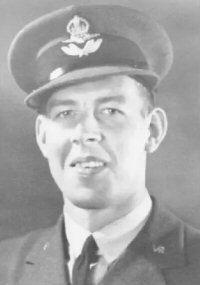 Pilot Officer Eric Foinette (deceased) *Signature Value : £40 | Eric joined the RAF in 1940 and trained as an Observer. Commissioned in 1941 he would be posted to 12 Squadron in 1942 flying Wellingtons. On his 10th Operation in February of that year his Wellington would be shot down over Denmark. Fortunately all 5 of the crew bailed out safely and would become POWs. Eric was initially sent to Oflag IX-A/H at Spangenberg before being moved to the infamous Stalag Luft III some 3 months later. He would remain here until 1945 and witness the aftermath of the Great Escape. He died in July 2014. |
 Warrant Officer Ken Johnson *Signature Value : £35 | As a Mid-Upper Gunner he flew on Lancasters with 9 and 61 Squadrons taking part in many raids including the final attack to sink the Tirpitz in November 1944 along with attacks on Berchtesgaden, Hitlers alpine home. |
 Wing Commander Ken Wallis (deceased) *Signature Value : £50 | Kenneth Horatio Wallis was born on April 26 1916 at Ely, Cambridgeshire, where his father ran a cycle and motorcycle shop, and was educated at The Kings School. Kenneth had limited vision in his right eye and as a child wore an eye patch and in 1936 this defect led to his rejection by the RAF. Undeterred, he paid £14 to obtain a private flying licence which required only a certificate signed by his GP, obtaining the licence after just 12 hours flying a Gypsy Moth. Having failed another test for the RAF in 1938, when he tried again after the outbreak of war Wallis decided to cheat. While the doctors back was turned, he sneaked a look with his good eye at the bottom line of letters on the test chart and passed. After flying Westland Lysander patrols with No 268 Squadron, in 1941 Wallis transferred to Bomber Command, flying Wellingtons with No 103 Squadron, based at RAF Elsham Wolds in north Lincolnshire, attacking heavily defended targets in the Ruhr. Though he survived 28 missions over cities in Germany he gained something of a reputation for being accident prone, earning the nickname Crasher. Returning from Frankfurt in September 1941, Wallis found his airfield blanketed by fog. He made a number of abortive attempts to land but, with his fuel tanks almost dry, he climbed to allow his crew to bail out. After they had done so, his parachute snagged on his seat - he finally got clear at very low level, and his parachute opened only seconds before he hit the ground. After a tour as a bombing instructor, Wallis left for Italy and flew bombing operations with No 37 Squadron. Having survived another crash when his aircraft was struck by lightning, he applied to fly Mosquito bombers at night - a mistake, as it meant that his night vision was tested. All hell let loose - You have been flying with a bomber crew and you cant see properly! he recalled being told. But the RAF ophthalmologist was more positive. He said, Wallis, I would rather have a man with a bit of fire in his belly who wants to fly than some of the perfect specimens I get here who do not. Wallis remained in the post-war RAF and specialised as an armament officer, among other things solving the problems of loading bombs efficiently on to the RAFs first jet bomber, the Canberra, and testing the Mach 2 – later known as the Lightning. During a two-year posting to the USAFs Strategic Air Command armament and electronics division in the 1950s, he flew B-36s laden with nuclear bombs over the North Pole and participated in powerboat races in vessels that he made from redundant parts, winning the 56-mile Missouri Marathon. He also set about building his first autogyro. He returned to Britain to be the Command Armament Officer at Fighter Command. Wallis demonstrated his autogyros at numerous RAF air shows before leaving the RAF in 1964 in the rank of wing commander. He moved to Norfolk, hoping that he would be able to put them into commercial production for reconnaissance, research and development, surveillance and military purposes. But it never happened. Instead, during the 1970s, he worked with a company that pioneered a type of multi-spectral aerial photography that could detect where bodies were buried, as a result of which he was called in to help in several high-profile missing-person searches. He also flew an autogyro at 18,976ft without oxygen; became the oldest pilot to set a world record when, aged 81, he accidentally achieved the fastest climb to 3,000ft, in seven minutes 20 seconds; and he set a world speed record for an autogyro of 129.1mph at the age of 89. kenneth Wallis never found a commercial manufacturer for his autogyros, although he was delighted when the James Bond film producer Cubby Broccoli recognised its dramatic potential: Wallis and his autogyro, Little Nellie, were duly dispatched to the set of You Only Live Twice, where Wallis stood in for Sean Connery in a famous sequence in which Bond, in a rocket-firing autogyro, fights baddies in orthodox helicopters, zipping around an active volcano - Wallis received many national and international awards, was appointed MBE in 1996. Wing Commander Kenneth Wallis, born April 26 1916, died September 1 2013. |
|
Contact Details |
Sign Up To Our Newsletter!
This website is owned by Cranston Fine Arts. Torwood House, Torwoodhill Road, Rhu, Helensburgh, Scotland, G848LE Contact: Tel: (+44) (0) 1436 820269. Email: cranstonorders -at- outlook.com
|
|


 Buy 1 Get 1 Half Price!


