|
|
|
|
|
|
|
|
|
| |||||||||||||||||||||||||||||||
| Signatures on this item | |
| *The value given for each signature has been calculated by us based on the historical significance and rarity of the signature. Values of many pilot signatures have risen in recent years and will likely continue to rise as they become more and more rare. | |
| Name | Info |
| Flight Lieutenant Sidney Cooper *Signature Value : £30 | |
| Group Captain George Brown *Signature Value : £40 | |
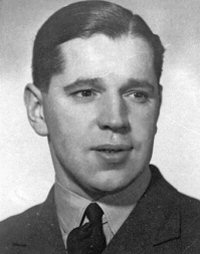 Group Captain Tom Gleave (deceased) *Signature Value : £40 | Gleave joined the RAF in 1930 after returning to Britain, qualifying as an exceptional pilot before serving with No. 1 Squadron and later as a flying instructor. At the outbreak of the Second World War he held staff appointments before taking command of No. 253 Squadron during the Battle of Britain. In August 1940 he was shot down and severely burned, undergoing extensive reconstructive surgery under Sir Archibald McIndoe at Queen Victoria Hospital, where he became a founding member and later Vice-President of the Guinea Pig Club. Returning to flying within a year, he commanded RAF Manston during the Channel Dash and the Dieppe operation, championing improvements that led to the construction of a long concrete runway to aid damaged returning aircraft. Promoted to Group Captain, Gleave played a pivotal role in Allied air planning, co-authoring the air strategy for Operation Overlord and later serving as Head of Air Plans at Supreme Headquarters Allied Expeditionary Force. His wartime service earned him numerous British and international honours, including the CBE, the French Légion d'Honneur and the US Bronze Star. After retiring from the RAF in 1953, he became an official historian with the Cabinet Office and remained a leading figure in the Guinea Pig Club and the Battle of Britain Fighter Association until his death in 1993. |
| The Aircraft : | |
| Name | Info |
| Hurricane | Royal Air Force Fighter, the Hawker Hurricane had a top speed of 320mph, at 18,200 feet and 340mph at 17,500, ceiling of 34,200 and a range of 935 miles. The Hurricane was armed with eight fixed wing mounted .303 browning machine guns in the Mark I and twelve .303 browning's in the MKIIB in the Hurricane MKIIC it had four 20mm cannon. All time classic fighter the Hurricane was designed in 1933-1934, the first prototype flew in June 1936 and a contract for 600 for the Royal Air Force was placed. The first production model flew ion the 12th October 1937 and 111 squadron of the Royal Air Force received the first Hurricanes in January 1938. By the outbreak of World war two the Royal Air Force had 18 operational squadrons of Hurricanes. During the Battle of Britain a total of 1715 Hurricanes took part, (which was more than the rest of the aircraft of the Royal air force put together) and almost 75% of the Victories during the Battle of Britain went to hurricane pilots. The Hawker Hurricane was used in all theatres during World war two, and in many roles. in total 14,533 Hurricanes were built. |
Related Pages :
Battle of Britain
|
Contact Details |
Sign Up To Our Newsletter!
This website is owned by Cranston Fine Arts. Torwood House, Torwoodhill Road, Rhu, Helensburgh, Scotland, G848LE Contact: Tel: (+44) (0) 1436 820269. Email: cranstonorders -at- outlook.com
|
|


